Palm nut composition: Shell ~83%, palm kernel ~17%
Palm kernel oil content: 45–55% (similar to peanut kernels)
Yield: 100 tons of crude palm oil produces approximately 10–13 tons of palm kernel oil as a by-product.
Palm fruit oil: Contains palmitic acid (C16) and oleic acid (C18:1); saturated fatty acid content ~50%; color: orange-red; high carotene content; melting point: 33–39°C. Primarily used for frying oil, instant noodles, and margarine.
Palm kernel oil: Contains lauric acid (C12); saturated fatty acid content >80%; color: pale yellow; melting point: 24–28°C (semi-solid at room temperature). Primarily used for confectionery, cocoa butter substitutes, ice cream, soap, and cosmetic base oils.
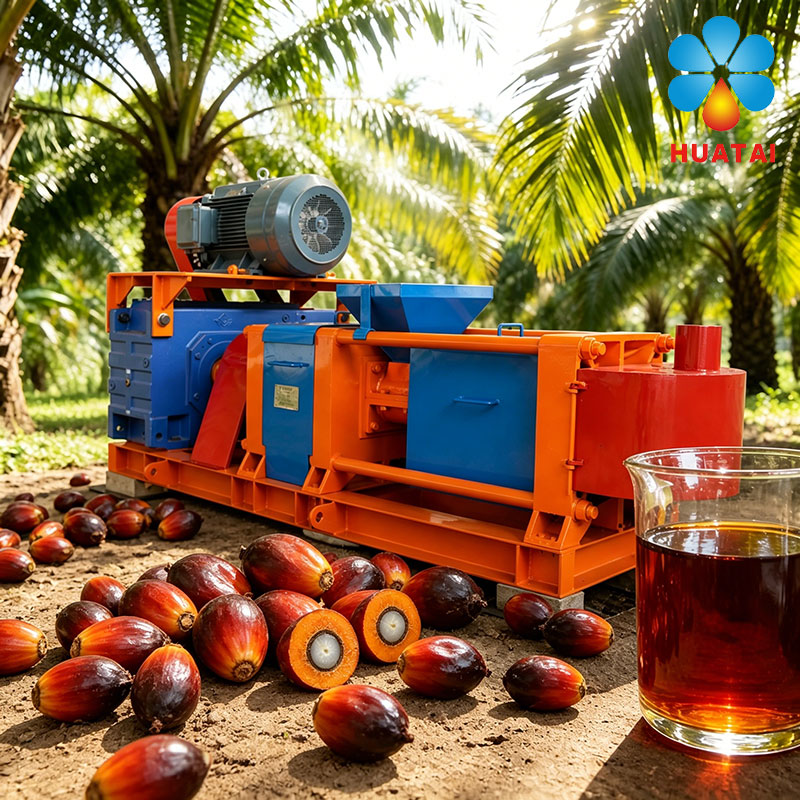
Kernel-shell separation: Crushing the palm nuts and using air separation to separate the hard shells from the kernels; kernel purity must exceed 95% (shell fragments can damage equipment and contaminate the oil).
Cleaning, crushing, and flaking: Breaking the kernels and pressing them into thin flakes to rupture the oil-bearing cells.
Steaming and roasting: 80–100°C; adjusting moisture content to facilitate oil extraction.
Crude oil refining and fractionation.
1. Palm kernel meal: The cake/residue remaining after oil extraction; moderate protein content; primarily used as feed for ruminants (cattle and sheep); unsuitable for large-scale use in pig or poultry feed due to high fiber content.
2. Palm shells: Hard; used as biomass fuel for boilers to generate electricity.
If you are interested in our palm oil machine and palm oil mill plant. You can contact us through online consultation, filling out the form below, email, phone, etc. Our engineers will customize the most suitable plan and best price for you.