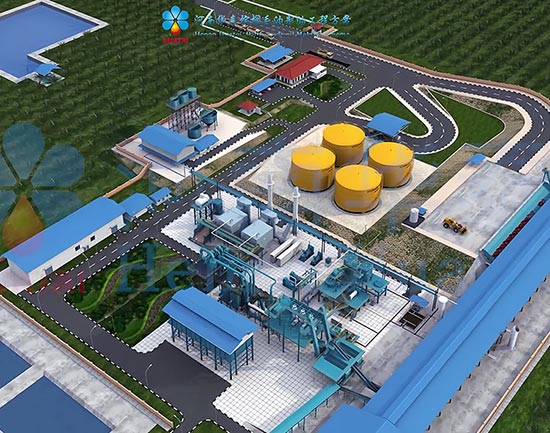
Biodiesel, often referred to as "green diesel," is produced through the esterification/transesterification of raw materials—such as vegetable oils, animal fats, waste oils/greases, or microbial oils—with methanol or ethanol to form fatty acid methyl esters (FAME) or ethyl esters. Its performance closely resembles that of conventional diesel, making it a high-quality alternative to petroleum-based fuels. Currently, major biodiesel-consuming nations primarily promote the use of blended fuels consisting of biodiesel mixed with fossil diesel.
In terms of production regions, the European Union is the largest biodiesel-producing region, accounting for approximately 30% of global output, while Indonesia is the single largest producing country, accounting for about 19%. Regarding feedstock composition, palm oil is the primary raw material, representing roughly 39% of the total; soybean oil and rapeseed oil account for 25% and 15% respectively, while biodiesel derived from waste oils/greases makes up only 10%.
Core Reaction: Transesterification
Palm oil (triglycerides) + Methanol + Alkaline catalyst (NaOH/KOH); stirred at a constant temperature of 50–65°C for 1–3 hours to produce:
Main product: Fatty acid methyl esters (Biodiesel/FAME), which can be directly blended with diesel for use;
By-product: Crude glycerin, which can be purified for use in personal care products, animal feed, and pharmaceuticals, significantly offsetting production costs.
Feedstock Pre-treatment
Feedstock types include: Refined, Bleached, and Deodorized (RBD) palm oil; Crude Palm Oil (CPO); and Palm Fatty Acid Distillate (PFAD—a low-cost waste product from oil mills).
Removal of moisture, gums, and free fatty acids (FFAs). High FFA levels can cause saponification and reduce yield; high-acid oils undergo acid washing and pre-esterification.
Main Transesterification Reaction
Oil-to-methanol ratio is approximately 10:2.4; reaction takes place in a sealed vessel with alkaline catalysis and constant-temperature stirring. Crude palm oil requires prior acid-catalyzed pre-esterification to minimize losses due to soap sludge formation.
Phase Separation
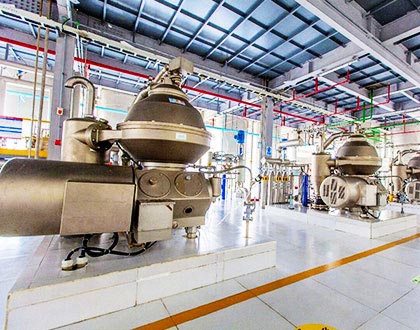
Static settling or centrifugal separation: Crude glycerin (heavy phase) settles at the bottom, while crude biodiesel (light phase) rises to the top; glycerin is recovered and purified separately. Water Washing and Neutralization
Washing with warm water removes residual methanol, soaps, and catalysts, followed by neutralization to a neutral pH.
Vacuum Drying
Negative pressure removes moisture and trace methanol, preventing fuel degradation during storage.
Finished Product Testing
Ensures compliance with national standards and international benchmarks (EN 14212, ASTM D6751); products are released only after meeting specifications for cetane number, cold filter plugging point, and flash point.
Highest yield per unit area globally; significant feedstock cost advantage
Annual palm oil yield is approximately 3 tonnes per hectare, compared to just 0.43 tonnes for soybeans and 0.67 tonnes for rapeseed; oil output per unit of land is seven times that of soybeans, offering the best cost-efficiency for large-scale plant construction in Southeast Asia and North Africa.
Excellent fuel performance
High saturated fatty acid content and high cetane number ensure complete combustion and stable engine power; superior lubricity compared to petroleum diesel reduces fuel pump wear and extends engine life; near-zero sulfur content leads to a drastic reduction in exhaust particulate matter and CO emissions.
Value-added glycerol by-product
Approximately 300 kg of crude glycerol is produced per tonne of palm oil; purification and sale of this by-product can offset about 30% of feedstock costs.
Strong policy support in tropical nations
Indonesia is implementing B50 (diesel blended with 50% palm biodiesel) and Malaysia B30; Nigeria and Morocco are planning B10/B20 blending standards, driving strong demand for local plant construction.
Good storage and blending compatibility
Can be blended with No. 0 petroleum diesel at any ratio (B5/B10/B20/B30/B50); compatible with existing diesel vehicles without requiring modifications.
If you are interested in our palm oil machine and palm oil mill plant. You can contact us through online consultation, filling out the form below, email, phone, etc. Our engineers will customize the most suitable plan and best price for you.