Palm oil is one of the most successfully developed oils in recent decades. It possesses excellent properties and is technically and economically superior to other oils. Palm oil contains approximately 50% saturated fatty acids and 50% unsaturated fatty acids, giving it better oxidative stability than other vegetable oils, making it a good frying oil. A reasonable method for utilizing palm oil is through fractionation to produce various products.
The fatty acid carbon chain lengths and degrees of unsaturation in palm oil triglycerides vary, resulting in a significant amount of both low-melting-point and high-melting-point triglycerides. Palm oil fractionation refers to separating palm oil into a low-melting-point liquid phase (palmitin) and a high-melting-point solid phase (stearin) by controlling the cooling and crystallization process.
Palm oil fractionation can separate palm oil into three components: stearin, palmitate, and an intermediate fraction. Three commonly used palm oil fractionation processes are: dry fractionation, solvent fractionation, and surfactant fractionation.
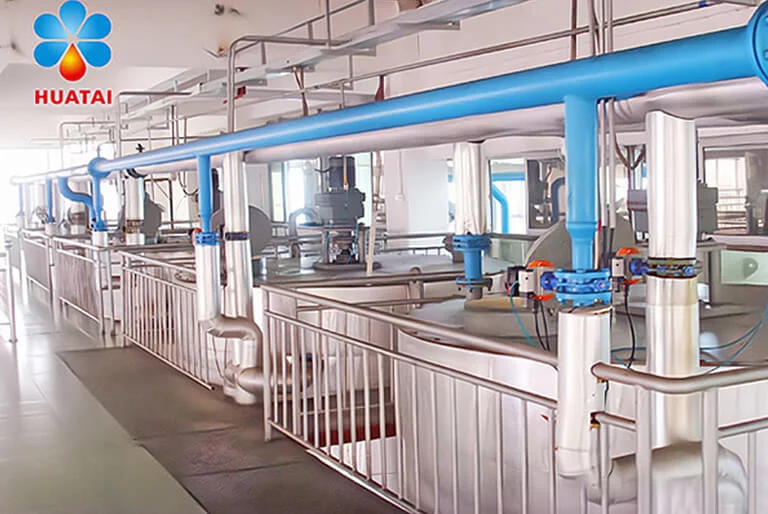
① Dry fractionation process: Palm oil → heating → cooling crystallization → filtration → palm oil, stearin
② Solvent fractionation process: Palm oil → solvent dilution → cooling crystallization → separation → solvent evaporation → palm oil, stearin
③ Surfactant fractionation process: Palm oil → palm kernel oil diluted with palm kernel palm oil → freezing → wetting stearin crystals → centrifugation → washing → drying → palm oil, stearin
If you are interested in our palm oil machine and palm oil mill plant. You can contact us through online consultation, filling out the form below, email, phone, etc. Our engineers will customize the most suitable plan and best price for you.