Oil refining generally refers to the purification of crude oil.
The impurities contained in crude oil not only affect its edible quality and safe storage, but also create difficulties for further oil processing and deep utilization. However, refining does not aim to remove all “impurities” from the oil. Instead, it aims to remove those impurities that negatively affect oil use, storage, and industrial processing, such as gossypol, phospholipids, proteins, sugars, mucilage, metals, and moisture, while retaining beneficial components such as tocopherols and sterols as much as possible.
Therefore, the main objectives of oil refining are:
To remove unnecessary and harmful impurities from oil according to different application and quality requirements;
To ensure the finished oil meets national standards;
To improve refining efficiency;
To create favorable conditions for further oil processing;
To improve the storage stability of oil products;
To enhance the comprehensive utilization value of by-products.
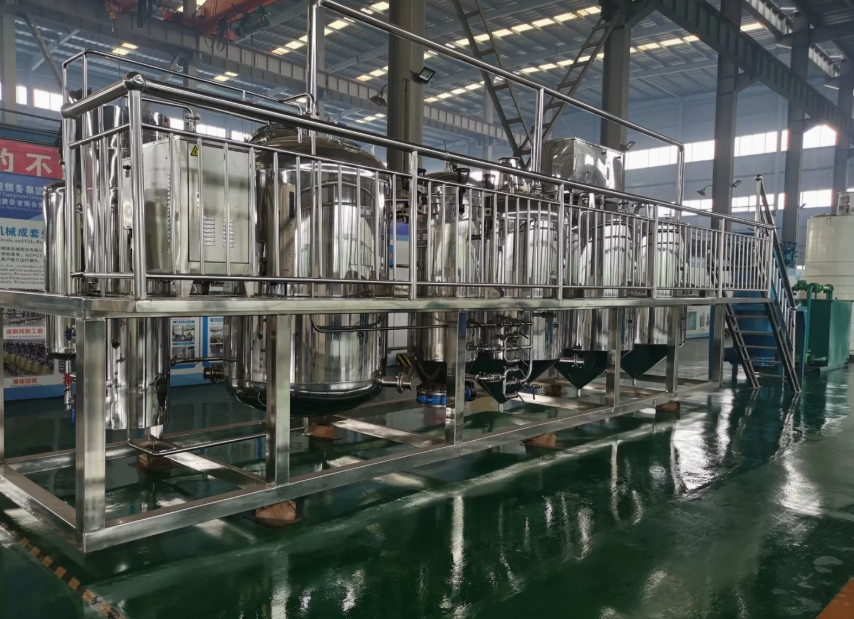
According to reaction mechanisms and processing characteristics, oil refining methods can be broadly classified into mechanical methods, chemical methods, and physicochemical methods.
Mechanical methods include sedimentation, filtration, and centrifugal separation.
Chemical methods include acid treatment, alkali neutralization, oxidation-reduction, and esterification.
Physicochemical methods include hydration, adsorption, steam distillation, liquid–liquid extraction, and cooling crystallization.
Oil refining is a complex and flexible process. In a single refining step, several different methods may be used together to complete the operation.
For example, alkali refining (neutralization) removes free fatty acids from crude oil through a chemical neutralization reaction. However, the soapstock formed during this reaction also adsorbs pigments and other impurities, which is a physicochemical effect. In addition, the oil-soapstock phases are usually separated by gravity settling or centrifugation, which belongs to a mechanical process.
Therefore, refining methods cannot be strictly separated from one another. Only through the scientific and effective combination of these methods can refining efficiency be improved and the desired refining results be achieved.
Does an edible oil refining line run continuously for 24 hours? For example, refining 1 ton of oil.
1-ton edible oil refining line does not need to run continuously for 24 hours.
For small and medium capacity refining systems (such as 1 ton per batch), the refining process is usually batch-type operation, not continuous running.
How long does it take to refine 1 ton of edible oil?
Refining 1 ton of edible oil typically takes 8–12 hours, depending on oil type and process settings.
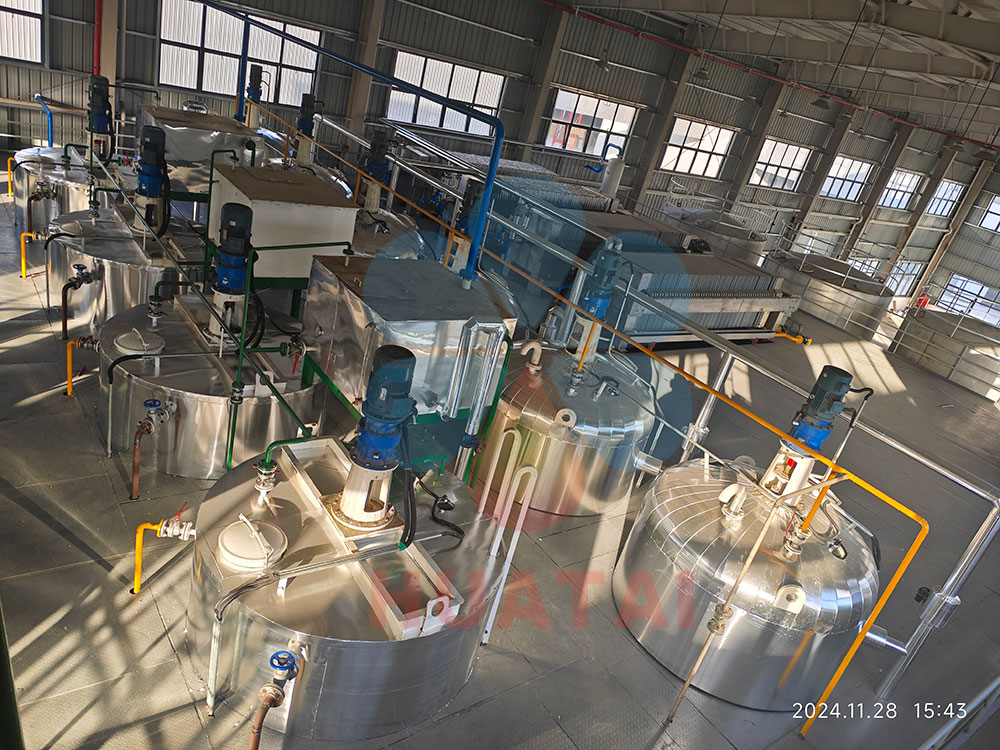
Degumming
Neutralization (deacidification)
Water washing & drying
Bleaching
Deodorization
Each stage requires heating, reaction time, settling, and discharge.
The equipment does not operate at full load continuously during the entire period.
If you are interested in our palm oil machine and palm oil mill plant. You can contact us through online consultation, filling out the form below, email, phone, etc. Our engineers will customize the most suitable plan and best price for you.