Waste palm oil sources fall into two categories: ① In-house production at palm oil mills (Palm Acid Oil/PAO, Palm Fatty Acid Distillate/PFAD, Sludge Palm Oil/SPO); ② Used palm frying oil from the food service industry (waste catering palm oil). None of these may re-enter the food industry; they must be repurposed for industrial use. Key challenges: High Free Fatty Acid (FFA) levels, high impurity content, water content, susceptibility to oxidation, and solidification in winter.
Pre-treatment (Crucial step required for all downstream applications)
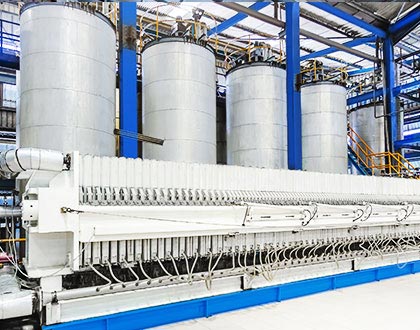
1. Coarse filtration: Screens/bag filters to remove plastics, fibers, and solid residues.
2. Heating (60–85°C): Reduces viscosity to facilitate separation.
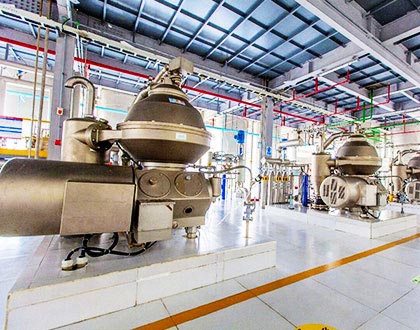
3. Three-phase centrifugal separation: Centrifuge separates the mixture into [Oil Phase | Aqueous Phase | Solid Residue] in a single pass, removing free water, sediment, gums, and protein impurities.
4. Degumming: Uses phosphoric acid or citric acid to remove phospholipids, preventing subsequent saponification and equipment clogging.
5. Pre-deacidification: High-FFA waste palm oil undergoes acid-catalyzed pre-esterification to convert free fatty acids into methyl esters, thereby reducing soap stock loss during alkali refining (the point of greatest yield loss for waste palm oil).
Pre-treatment output: Clean industrial-grade crude waste palm oil, which can be sold directly as feedstock or undergo further deep processing.
Mainstream Deep Processing Routes (3 options, ranked by investment cost: low to high)
Route A: Fatty Acid Production (Simplest; suitable for small and medium-sized plants)
Pre-treatment → Hydrolysis (high-pressure water hydrolysis) → Fractionation → Palm fatty acids, stearic acid.
By-product: Glycerin water (for crude glycerin recovery).
Pros: Mature technology, low equipment investment; Cons: Moderate product value-add. Route B: Transesterification to produce First-Generation Biodiesel (Fatty Acid Methyl Ester - FAME)
Pretreatment + Pre-esterification → Transesterification (using methanol and catalyst) → Settling/Centrifugal separation → Crude glycerol (bottom layer) & Crude methyl ester (top layer) → Water washing, vacuum drying, and rectification to yield biodiesel compliant with EN14212/ASTM standards.
Popular in foreign trade: Southeast Asia and Africa extensively use waste palm oil to produce FAME; eligible for ISCC carbon certification and export price premiums.
Drawbacks: Poor low-temperature performance; palm-based biodiesel has a relatively high cold filter plugging point (CFPP), limiting its use in cold regions.
Route C: Hydrodeoxygenation to produce Second-Generation Biodiesel (HVO – Hydrotreated Vegetable Oil / Hydroprocessed Esters and Fatty Acids)
Pretreatment (deep impurity, metal, and chlorine removal) → Hydrodeoxygenation, decarboxylation, and isomerization → Alkane-based biofuels suitable for direct blending into aviation kerosene (CORSIA-compliant jet fuel).
Advantages: Superior quality, excellent low-temperature performance, high carbon reduction value, and highest export prices. Disadvantages: Huge investment required; necessitates hydrogen supply and high-pressure reactors; high barrier to entry.

1. Crude Glycerin: A by-product of transesterification; after purification, it serves as a raw material for daily chemicals, pharmaceuticals, and epichlorohydrin production.
2. Soap Stock / Bleaching Earth Residue: Contains residual oil that can be recovered; the solid waste can be used to produce organic fertilizer (subject to strict environmental regulations).
3. Wastewater: High-COD oily wastewater; requires a treatment process involving demulsification followed by anaerobic and aerobic biological treatment—direct discharge is prohibited (violates environmental "red lines" in the palm oil industry).
1. High Volatility in Acid Value: PFAD (Palm Fatty Acid Distillate) has a very high acid value; direct alkali refining is unfeasible as it generates excessive soap stock, leading to significant oil loss.
2. Solidification Characteristics: Solidifies at ambient temperatures; storage tanks and pipelines require heat tracing and insulation.
3. Complex Impurities: Sludge-derived SPO contains significant amounts of silt and metal ions that can poison catalysts, thereby increasing pretreatment costs.
4. Oxidation: Prone to excessive oxidation during storage; storage tanks require nitrogen blanketing for protection.
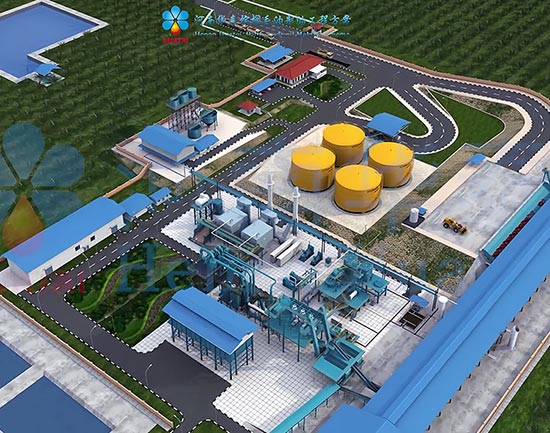
Pretreatment: Heating tanks, bag filters, three-phase disc centrifuges, degumming reaction tanks;
Esterification / Transesterification: Reaction vessels, methanol recovery systems, centrifuges, water washing towers, vacuum drying units;
HVO Route: Hydrogenation reactors, hydrogen compressors, fractionation towers (heavy-duty, high-pressure equipment).
1. Low-barrier projects: Pre-treatment and purification only (selling cleaned waste palm oil feedstock); requires minimal investment; a common practice among Southeast Asian processing plants; no need to build a biodiesel production unit.
2. Medium-investment projects: FAME biodiesel; suitable for palm-producing regions (Malaysia, Indonesia) due to proximity to feedstock; requires supporting methanol storage tanks.
3. High-barrier projects: HVO/Sustainable Aviation Fuel (SAF); large-scale industrial or capital-intensive projects; suitable for fulfilling export orders requiring international carbon certification.
4. Compliance: Waste oils/fats are regulated as hazardous waste; both domestic and Southeast Asian operations require Environmental Impact Assessments (EIA) and solid waste handling licenses; exports require ISCC sustainability certification.
Waste palm oil (including palm acid oil, PFAD, and used frying palm oil) undergoes filtration, heating, and three-phase centrifugation to remove water, sludge, and gums; high-acid-value feedstock requires pre-esterification to reduce free fatty acid content. Key resource recovery pathways include: ① hydrolysis to produce fatty acids; ② transesterification to produce fatty acid methyl esters (first-generation biodiesel); and ③ hydrodeoxygenation to produce second-generation hydrocarbon-based biodiesel or bio-jet fuel; crude glycerin is a byproduct. Due to high acid values and a tendency to solidify at low temperatures, the entire system requires heat tracing, and wastewater requires advanced treatment.
If you are interested in our palm oil machine and palm oil mill plant. You can contact us through online consultation, filling out the form below, email, phone, etc. Our engineers will customize the most suitable plan and best price for you.