Comprehensive Guide to Constructing Large-Scale Palm Oil Plants (Targeting the African Market: Primarily FFB Milling Plants with Provisions for Future Refining Expansion)
Palm Fresh Fruit Bunch (FFB) Milling Plant: Uses FFB as raw material; produces Crude Palm Oil (CPO) and Palm Kernels (PK); must be located near plantations.
Palm Oil Refining/Fractionation Plant: Sources CPO as raw material; produces refined palm oil, palm kernel oil, and olein/stearin fractions; suitable for port locations.
Industry standard for "large-scale" plants: 30 t/h to 60 t/h FFB processing lines (daily processing capacity of 720–1,440 tons).
Critical Site Selection Rules (Determining Project Viability)
Raw Material Radius (Strict Limit)
FFB must be processed within 24 hours of harvesting; delays exceeding 48 hours lead to a sharp rise in Free Fatty Acids (FFA) and reduced oil extraction rates.
Optimal scenario: Stable supply of sufficient FFB within a 30–50 km radius of the plant.
Long-distance transport of fresh fruit to the plant is strictly discouraged.
Water Supply
Water consumption is 1–2.5 tons per ton of FFB; a 60 t/h plant requires ≥2,000 m³ of water daily; prioritize locations near rivers or areas with abundant groundwater.
Transportation
Direct access via main roads to accommodate continuous heavy truck traffic; include loading platforms for outbound transport in the crude oil storage tank area.
Energy Strategy
Standard feature for large plants: Biomass boilers utilizing Empty Fruit Bunches (EFB), fibers, and shells as fuel to generate steam; coupled with steam turbine generators for self-generated electricity, eliminating reliance on unstable local power grids.
Land Requirement Reference
30 t/h complete milling plant: 25–40 *mu* (approx. 1.7–2.7 hectares);
60 t/h milling plant + crude oil tank farm + wastewater treatment: 50–80 *mu* (approx. 3.3–5.3 hectares);
Reserve additional land if future refining and fractionation capabilities are planned. Complete Process Flow (Large-scale Continuous Pressing Line)
Fresh Fruit Reception → Sterilization → Threshing → Digestion (Cooking & Mashing) → Twin-Screw Pressing → Crude Oil Clarification & Purification → CPO Storage Tank
Press Cake → Fiber/Kernel Separation → Kernel Drying → Palm Kernel Temporary Storage (for external sale or dedicated kernel oil workshop)
Sterilization (Critical Stage)
Horizontal batch sterilizer; 0.3 MPa saturated steam; 90-minute cycle; inactivates lipases, controls FFA levels, and prevents crude oil rancidity.
Threshing
Rotary thresher; separates fruitlets from Empty Fruit Bunches (EFB); EFB can be returned to the field as fertilizer or used as boiler fuel.
Digester
Continuous heating and agitation; ruptures fruit pulp cells to maximize oil extraction yield.
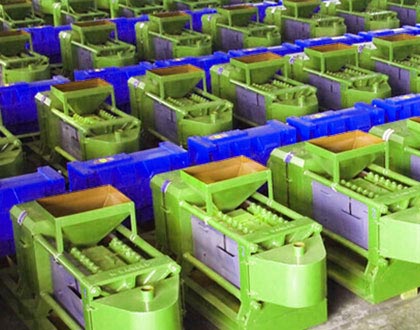
Twin-Screw Press
Industry-leading performance: Using high-quality Tenera fresh fruit, the Crude Palm Oil (CPO) extraction rate is 21%–24%, with residual oil in the cake controlled at ≤1.2%.
Clarification Section
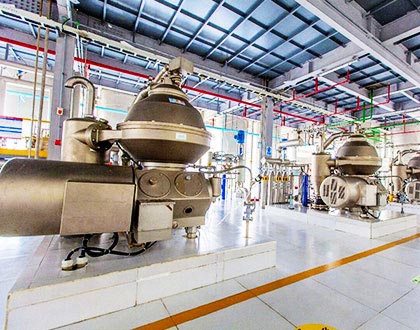
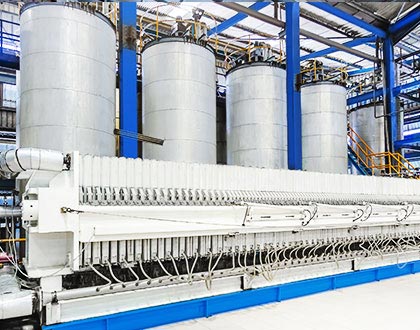
Heating, water dilution, sedimentation, and sludge removal via disc centrifuge to produce high-quality Crude Palm Oil (CPO). Optional downstream expansion:
Crude Palm Oil → Continuous Refining (degumming, deacidification, bleaching, deodorization) → Fractionation (Palm Olein / Palm Stearin)
1 Main production section equipment
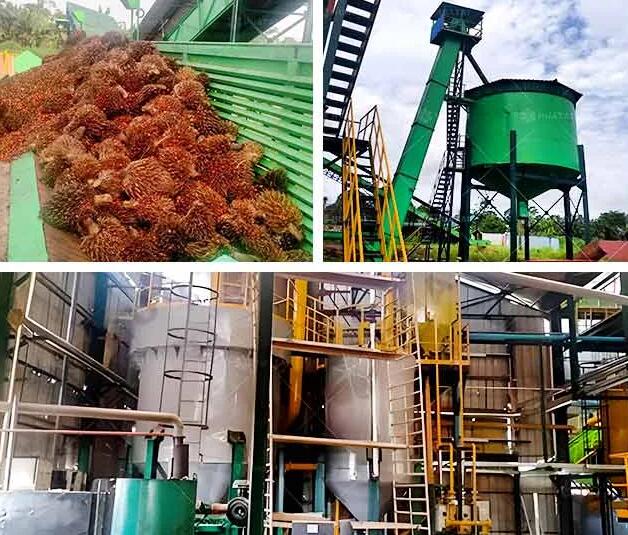
Weighbridge, Fresh Fruit Bunch (FFB) unloading platform, conveyor system, horizontal sterilizer bank, rotary fruit thresher, digester, twin-screw oil press, clarification tank, disc centrifuge, crude oil drying system
2 By-product recovery system
Fiber-nut separator, nut dryer, shell-kernel air separator
3 Utilities (significant investment share)
Biomass steam boiler + steam turbine generator set (self-powering solution)
Circulating cooling water system, water purification system
Crude palm oil storage tank farm (large plants typically maintain 3,000–10,000 m³ capacity), palm kernel warehouse
4 Environmental protection system [Mandatory for approval]
POME (Palm Oil Mill Effluent) treatment system (major environmental challenge in the industry)
Anaerobic fermentation of wastewater produces biogas for boiler combustion; simple solution: multi-stage anaerobic ponds; high-standard configuration: biogas power generation.
Solid waste: EFB (Empty Fruit Bunches), fiber, and shells are collected and utilized.
30 t/h FFB large-scale pressing line: Complete equipment set $6 million – $12 million
45–60 t/h fully automated large-scale pressing line: $15 million – $32 million
Tailor processing line according to FFB capacity, land size, and budget.
Offer modular design options for smallholder mills or scalable upgrades.
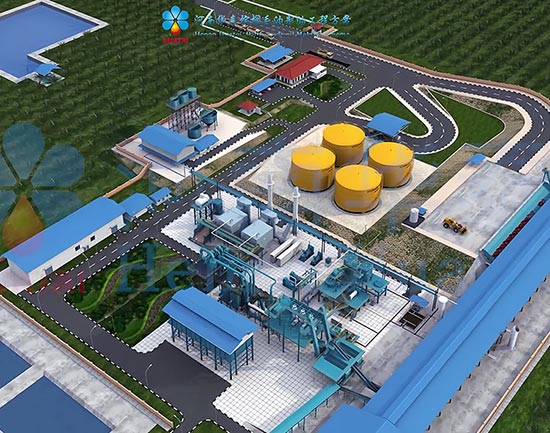
Provide 3D plant layout drawings specific to palm oil flow.
If you are interested in our palm oil machine and palm oil mill plant. You can contact us through online consultation, filling out the form below, email, phone, etc. Our engineers will customize the most suitable plan and best price for you.